
Comprehensive Plan Update, May 2026
Submitted by Jackie Lane, FOCC Board of Directors
Overview
 On April 27th and 28th, the Clark County Council held a hearing to select a Preferred Alternative for the Comprehensive Plan. For the unfamiliar, under the State Environmental Policy Act (SEPA), the county must consider the environmental impacts of its Comp Plan Update, and the selection of a Preferred Alternative was an optional part of this process.
Unfortunately, the majority of the Clark County Council voted to adopt a Preferred Alternative that needlessly expands urban growth boundaries, destroys prime farmland, and will exacerbate urban sprawl and the climate crisis. With a 3-2 vote, the Council adopted most of the Planning Commission’s recommendation by selecting Alternative 2 of the Draft Environmental Impact Statement–plus additional agricultural land in Camas proposed in Alternative 3–as their Preferred Alternative for the 2025 County Comprehensive Plan Update Final EIS. Alternative 2 expands the urban growth areas of Ridgefield, La Center, Battle Ground, and Camas by over a thousand acres collectively, while including the de-designation of hundreds of acres of prime agricultural land. While Councilors Yung and Little correctly stated that the selection of a Preferred Alternative was not the final decision, it is important to note that, “By identifying a preferred alternative, reviewers are made aware of which alternative the lead agency feels is best or appears most likely to be approved” according to the Washington Department of Ecology State Environmental Policy Act 2018 Handbook.
The Hearing
Meeting materials can be found here: 2025 Update Meeting and Event Information | Clark County.
The selected Preferred Alternative will be used to complete the Final Environmental Impact Study (FEIS). The cities were all given a chance to speak, and most did. Interested boards and commissions were also given the opportunity to speak (3 did), as well as the public.
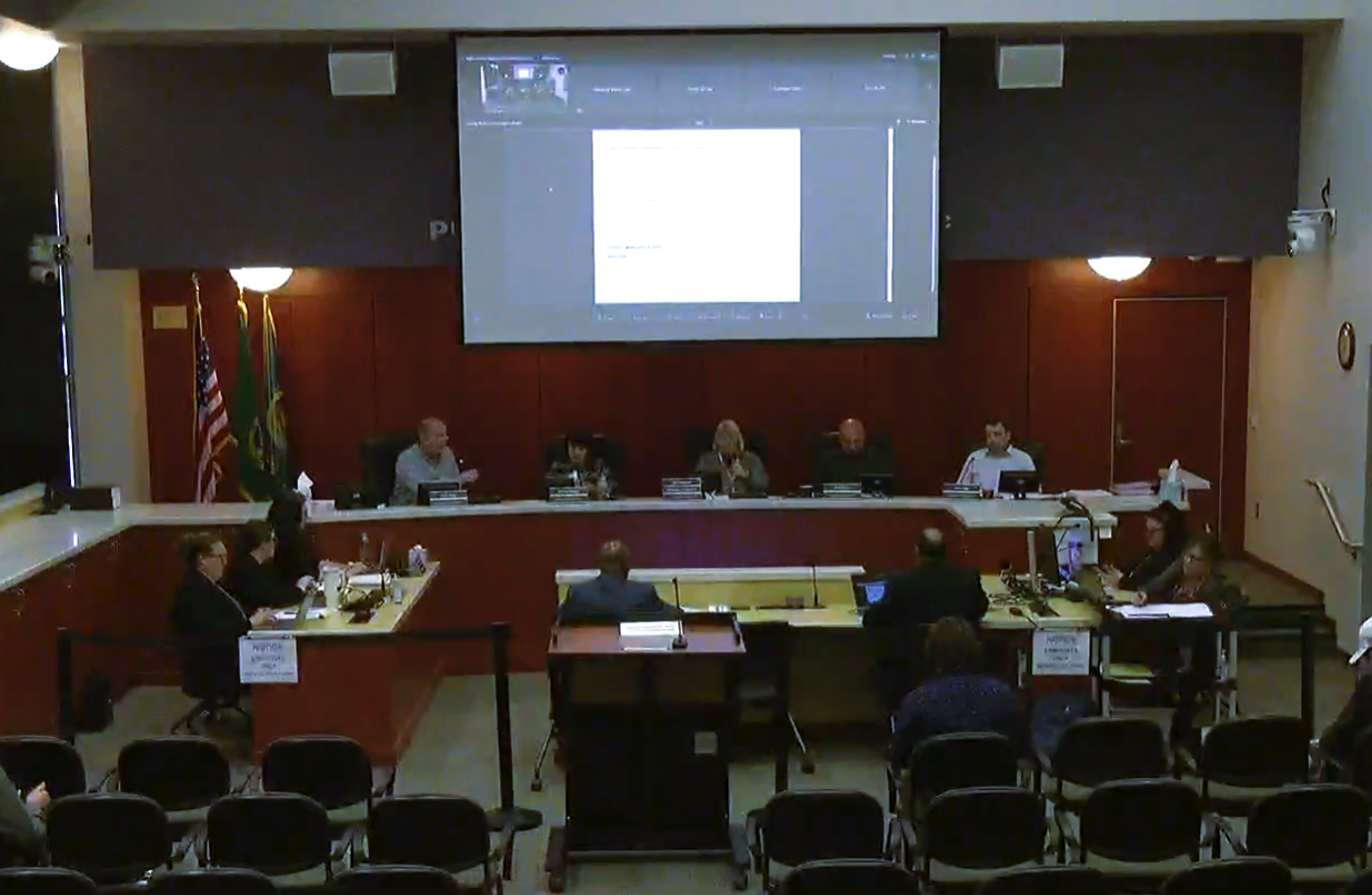 More than 30 people commented, with 19 in favor of an alternative in which agricultural lands would be protected, with no change to the current urban growth boundaries (UGBs). There were also concerns voiced about expanding boundaries when the county hasn’t completed the infrastructure required to support prior boundary expansions (specifically around 179th St.). Other comments came from property owners standing to benefit if their properties were to be included in a UGB and development interests standing to benefit from development of those properties. In fact, one of the mayors even stated that some of the Ag properties they want to annex were brought into the discussion by the property owners.
Significant written testimony was also submitted. It was clear that outside of those who stand to profit, there is little public support for urban boundary expansion over farmland in the county.
The Breakdown
Here is a link to the Alternatives Table for reference: 2026-0108 Preferred alternative selection table
The 3 Alternatives contain the items that were studied in the Draft Environmental Impact Study (DEIS) based on prior Council and Planning Commission meetings and hearings. Alternative 1 – no change – is required by the State Environmental Policy Act (SEPA) . Alternative 2 included city and staff proposals, while Alternative 3 added additional items from the cities—none of which were recommended by staff or the Planning Commission (PC). The PC recommendations are included in the Preferred alternative selection table linked above. The PC went through the alternatives line by line, so while their selection closely aligns with Alternative 2, there were some variances.
Below is what was proposed by Matt Little and adopted in a 3-2 vote (Little, Yung, Belkot vs. Marshall, Fuentes).
The decision largely supported the PC recommendations (including de-designating agricultural land by La Center and Ridgefield, and expansion of the Battle Ground UGB west to Dollars Corner) EXCEPT:
- Meadow Glade is removed from Battle Ground UGB (PC didn’t recommend, but both the city and the residents of Meadow Glade want this to happen).
- The conditioning of the creation of a Transfer of Development Rights (TDR) program with any ag land de-designation was removed. There is no longer even a pretense that other farmland will be protected in return for the ag land they are de-designating.
- 3B from Alternative 3 – ag land next to Camas – is included.
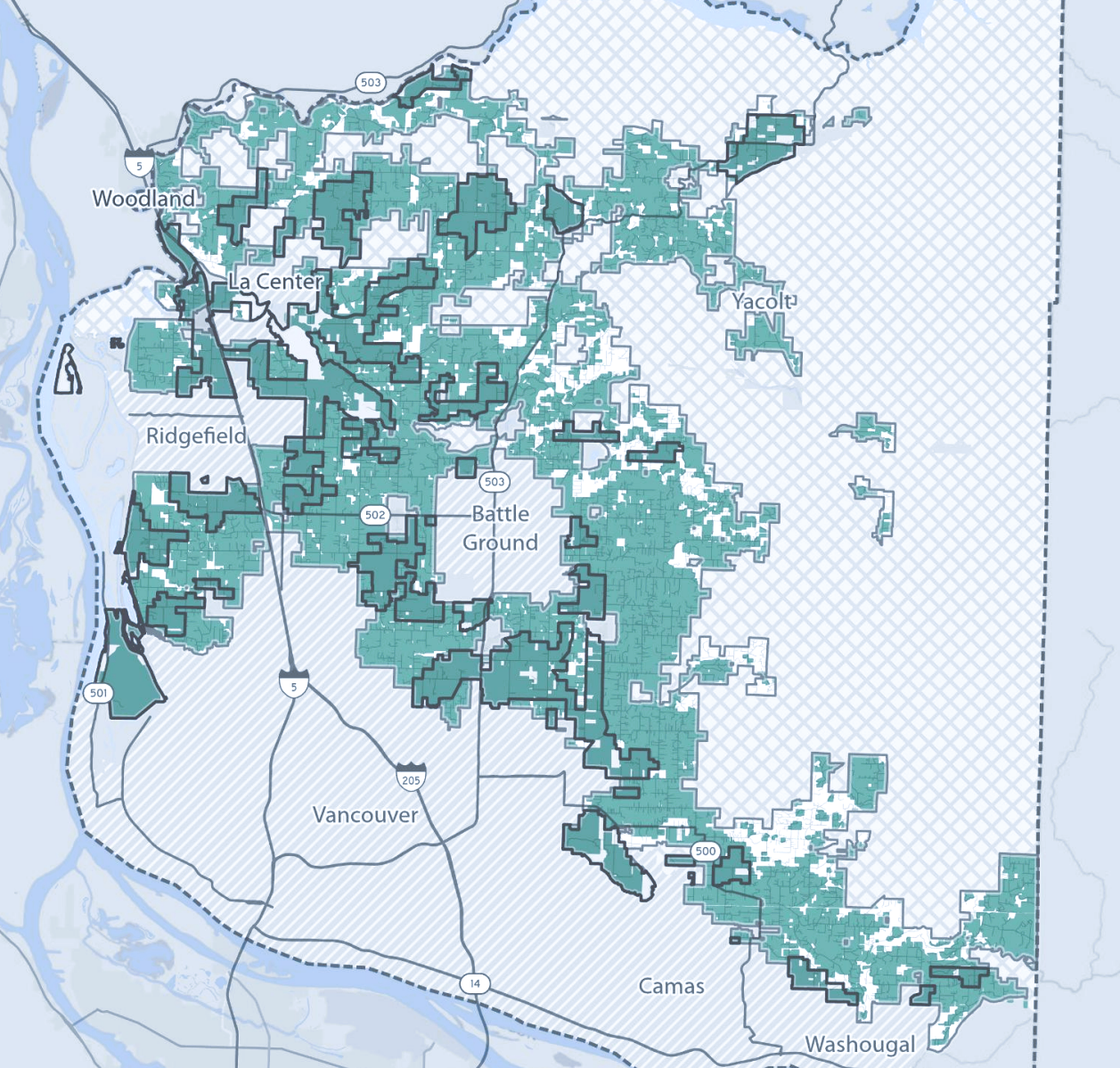
Agricultural land base from Clark County’s 2025 Agricultural Lands Study (everything in green has agricultural capability per state criteria)
In summary, the Council’s officially adopted preferences going into the Final Environmental Impact Statement process contradict the findings of the 2025 Agricultural Lands Study, recommendations of the Agricultural Advisory Commission, legal requirements of the Growth Management Act (GMA), and the overwhelming support for protecting our resource lands expressed by the residents of Clark County in both written and verbal testimony submitted for the Hearing. It also goes further than even the Planning Commission recommendations in destroying agricultural lands.
The Consequences
There will be a number of consequences for this decision, including:
- The County is already out of compliance with the Growth Management Act (GMA) due to missing the December 2026 deadline. This is a result of deciding at the last moment to do a county-wide Agricultural Lands Study (costing $155,003). The cities of La Center, Ridgefield, and Camas had pushed for this, and ultimately received the support of Belkot, Yung, and Little knowing that it would delay the Comp Plan. They needed this study in order to allow de-designation of any ag lands (a requirement of the GMA). In the end, the study did not support de-designation of ag land, but instead suggested that tens of thousands of acres of rural land should be designated as agricultural. Discussions on the inclusion of TDRs further delayed progress on the Comp Plan. In addition to the costs of staff time, consultants, and legal expenses, this will cost the county grants and low cost loans it is ineligible for while out of compliance. For reference, the county lost $10 million in the 2016 Comp Plan cycle as a result of its noncompliance. The current Council has been warned repeatedly by their staff and General Counsel about this risk. In fact, the Reflector recently reported about impacts to individual cities’ grant funding for parks because of county noncompliance.
- The county will lose hundreds of acres of farmland that cannot be replaced.
- The recommendation from the Planning Commission had included a provision, proposed by the cities of Ridgefield and supported by Camas and La Center, to develop a TDR program and prevent development of the ag land ceded to those cities until the developers are able to buy development rights from other farm owners, thus protecting those lands in return. This requirement has been removed.
- It is extremely likely the County’s Comp Plan will be appealed and that the county will lose. They have lost on appeal in prior cycles for attempting to illegally and unnecessarily de-designate ag land. In addition to the Ag Study finding that the land in question is Ag land of statewide significance, the county’s own data shows that the forecasted growth can be accommodated within the existing UGBs—and therefore it is not legally defensible to expand them. The county’s counsel and staff have been warning Council of this for some time. While Councilor Little stated that “we’ll get sued no matter what”, it is worth noting that the development interests have not won against the county.
- Until the Comp Plan is completed, and all appeals resolved, nothing in it can be implemented. This will delay actions by the other cities.
What’s Next?
Here is the updated project schedule: 2025-comprehensive-plan-update_project-timeline-updated-4-28-2026.pdf
This schedule shows an October 23rd, 2026 completion date, which begins the 60 day appeal period to the GMA board. As a reminder, the plan was originally due December of last year.
While we had hoped that the Council would make the right decision to carry out the clear will of their constituents and make the responsible choice regarding food security, climate change resiliency, and protecting farmland for future generations of farmers, the fact remains that they will ultimately be accountable to compliance with the Growth Management Act (GMA).
Read FOCC’s full statement on the hearing outcome, including thank yous and a summary of outreach work on the Comp Plan