The Ups and Downs of Dealing with Commissioner Upthegrove, the Department of Natural Resources, and the Board of Natural Resources: Legacy Forest Update
 For more background on this issue, you can review our last legacy forest update or previous articles on the Dabbler.
Big sigh, deep breath…Friends, we faced our last yearly Board of Natural Resources (BNR) meeting this December 2, 2025. FOCC has written and submitted three pages of comments, which you can see here. Accompanying our letter was the fourth letter written by the Clark County Council to the DNR/BNR.
We began this journey with almost no information on timber sales in eastern Clark County in August of 2024 as we learned about the proposed and finalized Dabbler timber sale. As you may recall, we went “to the wall” and joined in litigation with the Legacy Forest Defense Coalition. This ended unfavorably because we were unable to obtain an injunction before our scheduled hearing, meaning the timber would all be cut before we had a hearing on the merits of the litigation, rendering the matter “moot.”
Remembering the Dabbler

Clark County Chair Marshall, Councilor Fuentes, Tonya Enger, and Mary Goody drove up to the Dabbler site before the sale was approved by the BNR where we saw the forest already marked with the DNR’s color coded system of leave trees, boundaries, etc. Unfortunately, Dabbler backs up to an old growth area and has acted as a buffer between the old growth and harsh elements of sun and weather. It was a spectacular place.
Did you know that each of the SEPA (State Environmental Protection Act) reports written on each of the proposed timber sale units comes with a map with directions to the units? You can actually drive there and see the forest the DNR is planning to decimate. There’s no other word for it. Of course, there will eventually be a tree plantation there, but it will not be as diverse as it had been, and it will certainly take quite a while to get to the point where it can protect the old growth right next to it. We asked and got word from DNR Auction Coordinator, Becky VonDracek, that there was no buffer between the Dabbler cut and the old growth.
FOCC Has Been Actively Engaged
We have been buried in this project ever since. There is so much to learn about the mechanisms and not enough time to catch up with the DNR’s extremely rapid-fire auction scheduling. Just before Dabbler, the Silver Vista units were cut. This went unopposed by anyone in our County because no one knew much about the sale, or what a legacy forest was except a few select persons, excluding the Clark County Council.
Since then, we have:
- Become active in the Washington State Lands Working Group, attending monthly meetings,
- Joined in daily email exchanges about how to convince Commissioner Upthegrove to remember and keep his campaign promise to protect 77,000 acres of legacy forest lands,
- Attended Legacy Forest Defense Coalition meetings and webinars,
- Attended BNR meetings and submitted public comment from FOCC
- Reported to the Clark County Council on our efforts, and successfully convinced them to write three more letters asking the DNR to meet with them in a meaningful way to address their concerns about options to the management of these precious lands
- Contacted Senator Adrian Cortes about our concerns that the Battle Ground School District will not receive its fair share of funding from the timber sales in its area because it doesn’t have a fully functioning levy in place.
Investigating the School Funding Tied to the Timber Sales
FOCC and other groups, such as the Legacy Forest Defense Coalition (LFDC), are also working to find a viable alternative to fund the Junior Taxing Districts, as the benefits these forests provide are invaluable to our water, climate, and wildlife and thus should no longer be wrongly tied to things such as school funding—pitting public schools against forests that ensure a liveable future for today’s school children. Additionally, clear cutting of these forests stands in stark opposition to Washington State’s own climate goals and Clark County’s climate obligations under the law. To reiterate, FOCC is fully supportive of funding for our County schools and all schools in Washington State.
It’s important to remember that a large portion of public opinion on this issue is manufactured by those who have succeeded in commanding the narrative. It is becoming more and more apparent that, up until now, it has been a convenient arrangement for the DNR that local officials and stakeholders don’t adequately understand the facts that underlie that narrative in the first place. In our efforts, we have done the work of untangling and clarifying the issue of school funding and how timber revenue works in reality.
In response to a public request, Alishia Topper, Clark County Treasurer, explained the highly complicated way of determining how each of the Junior Taxing Districts (JTDs) receive funds from timber company proceeds. Recall that the money comes in as the timber is harvested, and so it is a rather random process which makes it difficult for the JTD’s to plan for the funds in their budgets. Each JTD has a tax code or tax amount. It is different for each school district, cemetery, the Common school trusts (1 and 2), county roads and ambulance services. There are also different types of levies that school districts can pass, such as a capital levy or a general levy.
A further question to Ms. Topper about the lack of a levy at the time timber funds are received in the Treasurer’s Office elicited this response: “No levy, no dollars!” This is not well known to the public. If they understood that passing a levy for the Battle Ground School District in 2026 would result in Battle Ground being able to reap perhaps over a million dollars in additional funds from the timber sale such as Dabbler and Turnover, perhaps the levy would pass.
The DNR and Timber Interests Meddled with Our Efforts
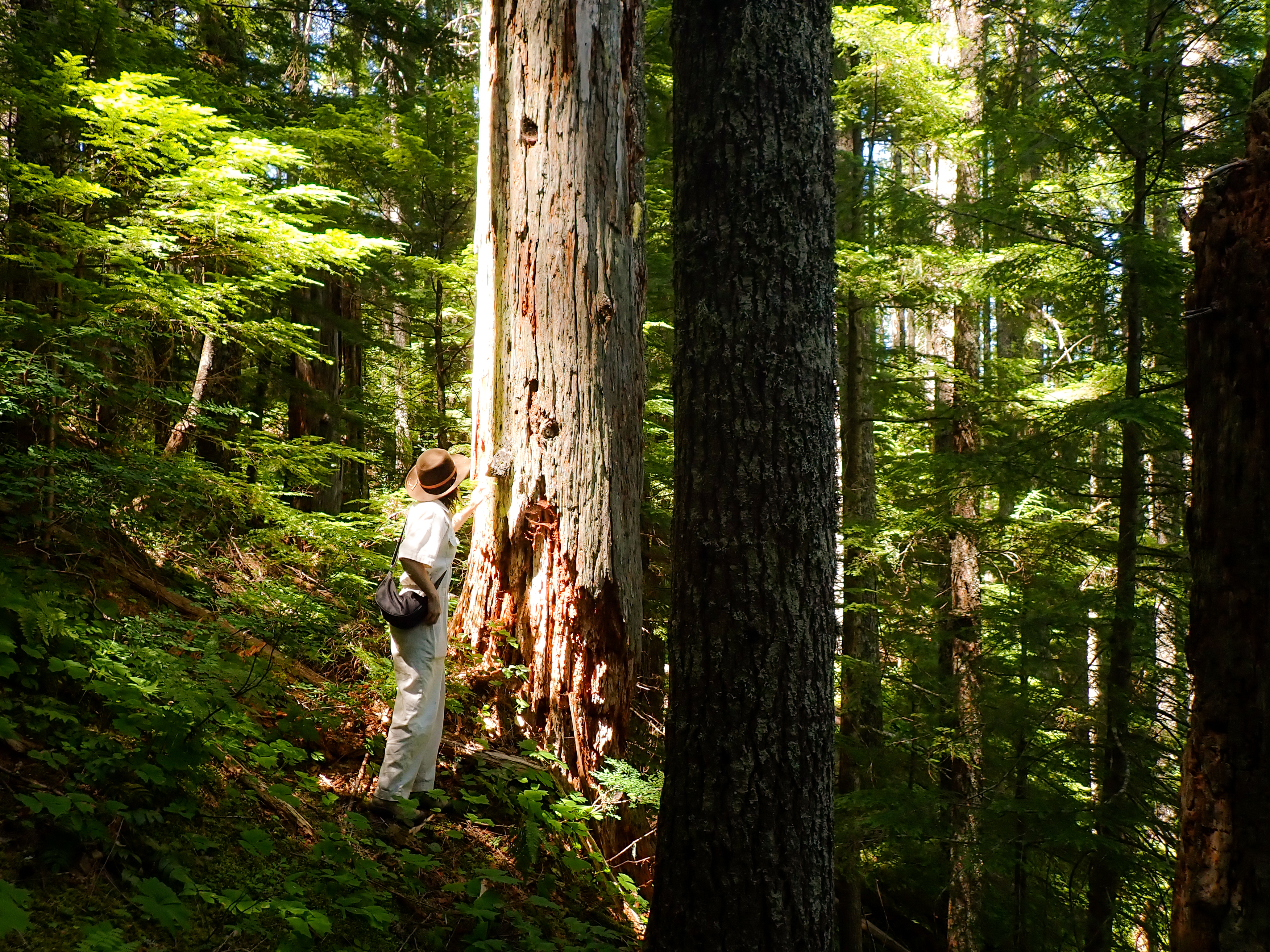
Photo of Turnover timber sale, courtesy of Tonya Enger
We know about Dabbler’s demise, but before Turnover went before the BNR for a vote, DNR staff visited Clark County and took some members of the Council on a tour of some of our legacy forest areas. By all accounts, this was informative and eye-opening for the Council members. Turnover was on the auction block for the November 4th, 2025, BNR meeting. DNR staff member Duane Emmons told the BNR, who questioned why the DNR had not addressed the Council’s request for a pause, that no Council member indicated after that tour that they had any concerns about going forward with the Turnover sale, which was inaccurate. As a result, Turnover just sold for $2.2 million.
Timber interests in the form of lobbyists and captured politicians are spearheading PR campaigns to maintain control of the information given to the public. Apparently, local elected officials seeking understanding about how these sales work and their impacts is threatening to the status quo of those making the most money off of these forests.
Recently, at two consecutive Council Time sessions, we briefly appeared to thank the Council for their support with their 4th letter, which originally mentioned both Dendrophobia and Copperhead. However, a lobbyist for the American Forest Resource Council, Heath Heikkila, appeared at both meetings and aggressively confronted the Council about the foolishness of writing such letters to the DNR, that they were hurting the school districts of other Counties by not allowing the timber cuts, and challenged information given to the Council by FOCC and other organizations. The disappointing result was that Copper Head was removed from the letter because it was not a Maturation II forest. FOCC, the WA State Lands Working Group, Legacy Forest Defense Coalition, and other groups dispute these erroneous and misleading statements by the timber industry. American Forest Resource Council is a timber industry group that represents timber corporations such as Stimson Lumber, who were the purchasers of the Dabbler legacy forest this last January.
We have been attempting to convey with urgency that Clark County’s remaining naturally regenerated forests such as Turnover, Dendrophobia, Copperhead, and others, are worth more to the county, and the people that live here, intact. As these lands are purportedly managed for the benefit of the public, we strongly lament that the words of our elected officials, the concerns of our residents and groups like ours are not taken more seriously by the DNR, BNR, and Commissioner Upthegrove.
Some points that we urged the DNR/BNR to consider:
- There are still no cumulative climate impacts considered in the SEPA checklist for Dendrophobia or Copper Head and other sales planned on naturally regenerated primary forest land. The source materials for the policy used in the Environmental Checklists have been found to be considerably out of date by recent analysis (Cole 2025). DNR management insists that these policies “mention climate change” but that rebuttal is non-specific, nor is there anywhere in the policies or checklist that considers all aspects of the environmental effects which is required under SEPA. The source material and policies used do not consider the most recent forecast of hotter, drier climates in the next 10 years and their effect on our forests. This is reflected in a recent statement by a DNR representative that “The main climate takeaway for Washington in 2024 was the continuation of long-term warming trends…For the third time in four years, the annual average temperature in Washington was among the 10 warmest on record” (Fitzgerald 2025). Recently, it was reported that a new study showed that 750,000 acres of forest was damaged in Washington and Oregon in the 2021 heatdome (OPB). The environmental checklist used for Dendrophobia or Copper Head sales do not consider this data. Similarly, a WA Forest Health Survey found that half a million acres of forest in Washington were stressed or damaged (Fitzgerald 2025).
- Less than 3% of forests in Western Washington are considered structurally complex by DNR’s definition. The forests in the sales contain some of the most viable forest land to be managed for structural complexity and future old-growth characteristics. Once they are intensively harvested, we can’t get those ecosystems back. Planting trees on the site is not the same as an intact ecosystem. Clark County deserves to have a say in saving the few remaining nearly old growth forests we have left. The units we speak of – Turnover, Dendrophobia, and Copper Head are the choicest forest sites to develop into old growth. We need them for multiple reasons, to meet the HCP’s old growth targets; to provide recreation for our residents; and an ecologically sound environment for the species who inhabit these areas.
What We’ve Accomplished, and Where We Go From Here
 Despite the challenges that remain in the fight to save our last legacy forests, our efforts have made some real, initial impacts. First and foremost, several members of the Council have realized that because we have been repeatedly coming to them with requests to write to the DNR and ask for a “pause” on legacy forest timber sales in eastern Clark County, that perhaps we need a working forest advisory commission or group to do the work of processing forest policy and myriad considerations of forest resources, and as well as advise them on how to proceed when a timber sale has been determined to be non-significant by the DNR and can go forward to be sold and logged.
Additionally, we are proud to highlight our efforts, thanks to partnership and guidance from Legacy Forest Defense Coalition, to nominate a large swath of biodiverse forest on Larch Mountain for the Natural Climate Solutions program, which would conserve this area that would otherwise eventually be logged by the WA Department of Natural Resources. The Clark County Council has written a letter of support to the DNR for this nomination, which is huge progress in making it a reality! You can check out photos of the Larch Mountain area from the Washington Trails Association: https://www.alltrails.com/en-gb/trail/us/washington/larch-mountain-loop-trail
Furthermore, as we move through the comprehensive planning process, it will also be critical for the community to come out in full force to back the Clark County Climate Community Advisory Group’s proposed policies for the Climate Element of the Comp Plan Update, including those pertaining to forest protection. One of those policies explicitly recommends advocacy to the DNR on Clark County trust land timber sales, rather than the former hands-off approach that left all of us in the dark about the poor management and destruction of our structurally complex forests.
Thanks for reading!
Tonya and Mary
References:
2021 heat dome left Rhode Island-sized damage in Oregon’s, Washington’s western forests – OPB
Cole, Brandi. 2025. “Evaluating Public Involvement in Environmental Assessment: A Case Study of Washington Department of Natural Resources Dabbler Timber Sale.” doi:10.7273/000007526.
Fitzgerald, Emily. 2025. “WA Forest Health Survey Finds 545,000 Acres of Stressed or Dead Trees.” The Columbian, July 11. https://www.columbian.com/news/2025/jul/04/wa-forest-health-survey-finds-545000-acres-of-stressed-or-dead-trees-2/